


The question everyone has before starting to dropship: Is dropshipping legal in 2026? Spoiler alert: Yes, dropshipping is a legal business model. Of course, as long as you follow standard laws around consumer protection, taxes, and truthful marketing.
The grey area with dropshipping isn’t the model itself; it’s the way people run it. In this guide, we’ll break down what actually makes dropshipping legal (or not), legal risks to avoid, and how laws vary by country.
Plus, we’ll show you how automation can help you stay 100% compliant. For instance, AutoDS helps you run a lawful business with full automation that reduces errors, avoids policy violations, and keeps your operations consistent.
Dropshipping is legal worldwide. You just have to follow standard business laws like taxes, consumer protection, and truthful advertising.
The problem is not the model, but shady practices. For example, selling counterfeit products, misleading customers, or ignoring refunds.
Laws and platform rules are different things. You can be legal and still get banned if you don’t follow marketplace policies.
Staying compliant is simpler than it sounds. Be transparent, choose reliable suppliers, and treat your store like a real business.
AutoDS helps you stay compliant with full automation, vetted suppliers, and a centralized dashboard.
Is Dropshipping Legal? (Short Answer)
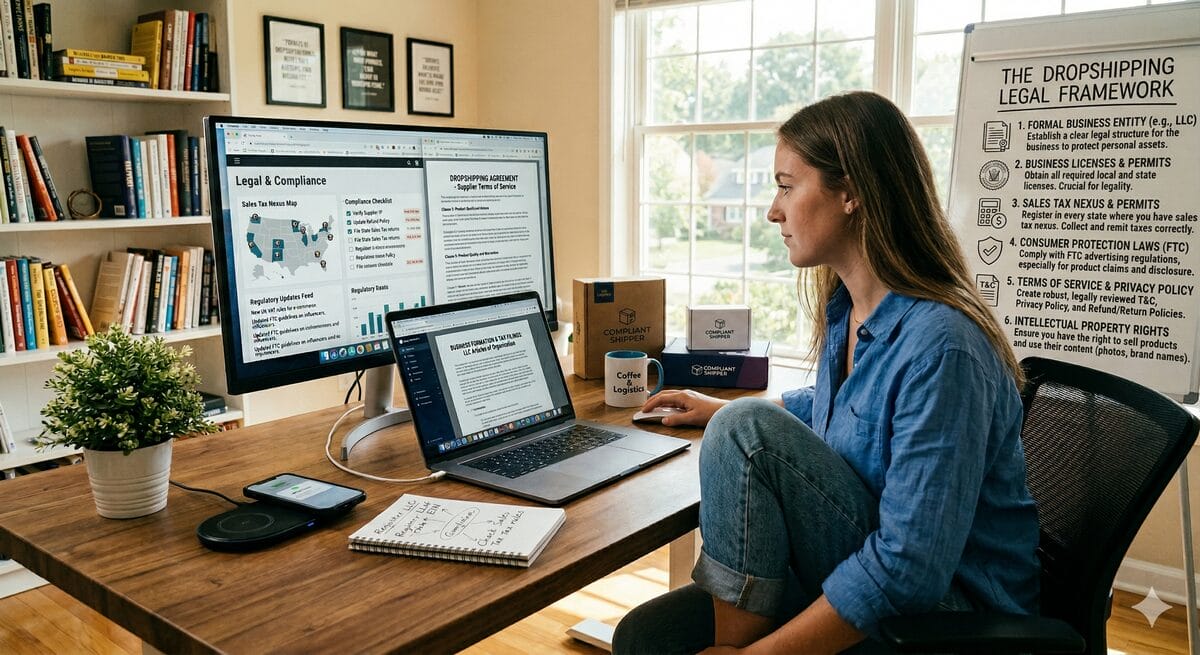
Yes, dropshipping is legal. Think of it this way: dropshipping is simply a fulfillment method. You basically sell products without holding stock. Then, a supplier ships orders directly to your customer. Legally speaking, it’s perfectly allowed.
So, why all the confusion? Because people often mix up three different things: the business model, how it’s executed, and the rules of specific platforms.
The problem arises when sellers use bad practices in their dropshipping strategy. Certain things can go against the law. For example, misleading product pages, selling counterfeit products, failing to deliver orders, or ignoring consumer protection laws. Add to that strict marketplace policies, and it’s easy to get scared.
But here’s the simple truth: dropshipping is legal as long as you run it like a real, honest business. Mostly, that means complying with taxes and local regulations (the ABC of a lawful operation). But it also means being transparent about what you sell, delivering what you promise, and handling refunds properly. Do that, and you’re good to go.
We’ll zoom in on all of this in the following sections.
What Makes Dropshipping Legal (or Illegal)?
Dropshipping isn’t illegal. But the way you run it can be. At the end of the day, you’re still the seller. Not your supplier, not the platform: you are. So whatever you sell, how you present it, and how you handle customers? Yep, that’s your responsibility.
And honestly? It’s easier to operate legally right from the start than to cut corners and deal with the mess later.
Now, there aren’t specific dropshipping laws and regulations. But there are general best practices that you should follow to comply with consumer protection laws, tax requirements, and advertising standards. For example:
1. Act as a legitimate retailer
Even if the supplier handles storage and shipping, you’re the seller of record. Customers buy from your store, not your supplier. Legally, this means you’re responsible for order fulfillment and delivery, customer support and refunds, product quality, and accuracy. You can’t blame the supplier if something goes wrong.
📦 Supplier’s Tip: To make sure everything runs smoothly on your supplier’s end, you can order a few samples before listing a product. This will let you assess the overall delivery experience, from product quality to packaging, shipping times, and accuracy.
2. Be transparent with your customers
Misleading information is a big no-no. In dropshipping and everywhere else. You need to be clear and honest about:
- Product descriptions (no false claims or fake reviews).
- Shipping times (especially if they can take longer than average).
- Pricing and fees
3. Source legal products only
This is something beginners might miss if they’re not properly informed. In e-commerce, not every product is safe or legal to sell. Make sure you stick to.
- Authentic products only. This means no counterfeits or branded items.
- Items that comply with local regulations. For example, check for electronics certifications or cosmetic ingredients that are approved.
- No restricted or prohibited goods, such as weapons, explosives, adult content, and things like that.
Comply with consumer protection laws. Every country has laws designed to protect buyers. And yes: you must follow them. This includes clear refund policies, respecting cancellation rights, and delivering within the promised timeframe. Ignoring these rules is a quick ride to negative reviews, but also to potential fines, bans, or legal actions.
So there you have it. Dropshipping is totally legal. You just have to follow basic rules that you would also have to follow in any other e-commerce model.
Is Dropshipping Legal Around the World?
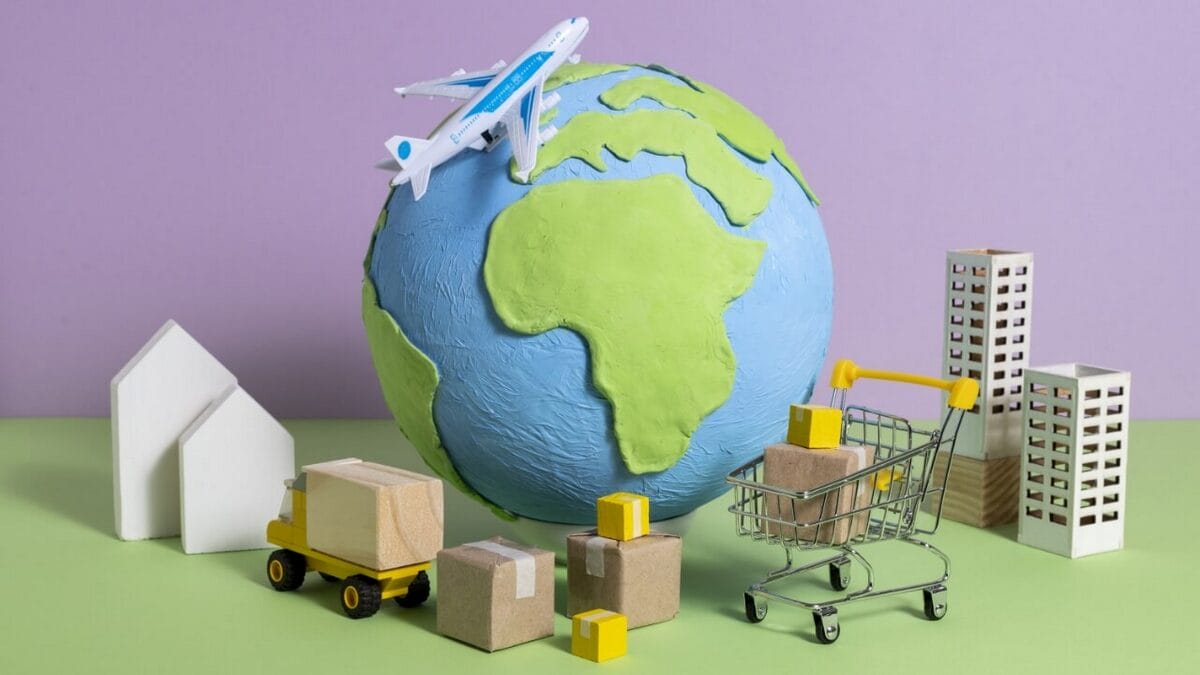
Now, is dropshipping legal in the US / UK / EU? Good news: Yes, dropshipping is legal all around the world.
That said, there’s a catch. You know how we’ve been mentioning consumer laws and tax regulations? Well, each country has its own. This means that what applies in the US might not be the same in the UK or Europe.
For dropshippers who sell in just one region, this is no big deal. You just learn your rules, follow them, and you’re good to go. But dropshippers selling abroad must comply with their own rules, plus the ones in the country (or countries) where their customers are.
Here’s what you should know about dropshipping legality by country:
United States
Dropshipping is fully legal in the US. You just need to operate like a standard e-commerce business. This includes:
- Collecting and remitting sales tax where required. This depends on something called nexus. Basically, this is a connection to a state, like having customers, inventory, or a certain level of sales there.
- Following the FTC (Federal Trade Commission) guidelines. These mostly require honest advertising, like no fake claims, misleading product descriptions, or hidden fees.
- Respecting consumer protection laws, like refunds and delivery expectations.
There’s no special dropshipping law. You’re simply treated as an online retailer.
United Kingdom
Just like in the US, dropshipping in the UK is totally legal. That said, there’s a bit more structure around taxes and consumer rights:
- You may need to register for VAT depending on your revenue. The current threshold is £90,000 in taxable turnover. Once you cross that, registration is mandatory. That said, if you’re selling goods from abroad to UK customers, VAT may apply from your very first sale, even below that threshold.
- You must comply with the Consumer Rights Act, including refund policies and product quality.
- Some basics: clear pricing, shipping info, and return terms are required.
European Union
The EU is where things get more regulated. But no worries: still very legal and doable if you follow the rules:
- VAT on dropshipping sales in the EU applies from the first order (especially for non-EU sellers).
- You may need to use systems like OSS or IOSS for cross-border sales. Don’t worry, we’ll get to this.
- Customers have a 14-day right of withdrawal (returns, no questions asked).
- Strong requirements around product safety, labeling, and data protection (GDPR).
Ok, let’s zoom in on that OSS and IOSS situation. Sounds complex, but these are here to make your life a little easier.
OSS and IOSS are EU tax schemes designed to simplify VAT collection: OSS (One Stop Shop) lets you report and pay for VAT for all your EU sales in one place, instead of registering in multiple countries. IOSS (Import One Stop Shop) applies to imported goods under €150 and allows you to collect VAT at checkout instead of at delivery (avoiding surprise fees for your customers).
So yes: dropshipping in the EU is a bit stricter. But those rules are also what make it legal and safe to dropship there, even when you’re doing it from the US or other regions.
Other Regions
Across most other countries (Canada, Australia, parts of Asia, etc), the same core idea applies:
- Register your business if required.
- Follow local tax rules.
- Respect consumer protection laws.
- Avoid restricted or regulated products.
Don’t worry: there’s no country where dropshipping is banned. Just make sure to always comply with local regulations.
Common Legal Risks in Dropshipping
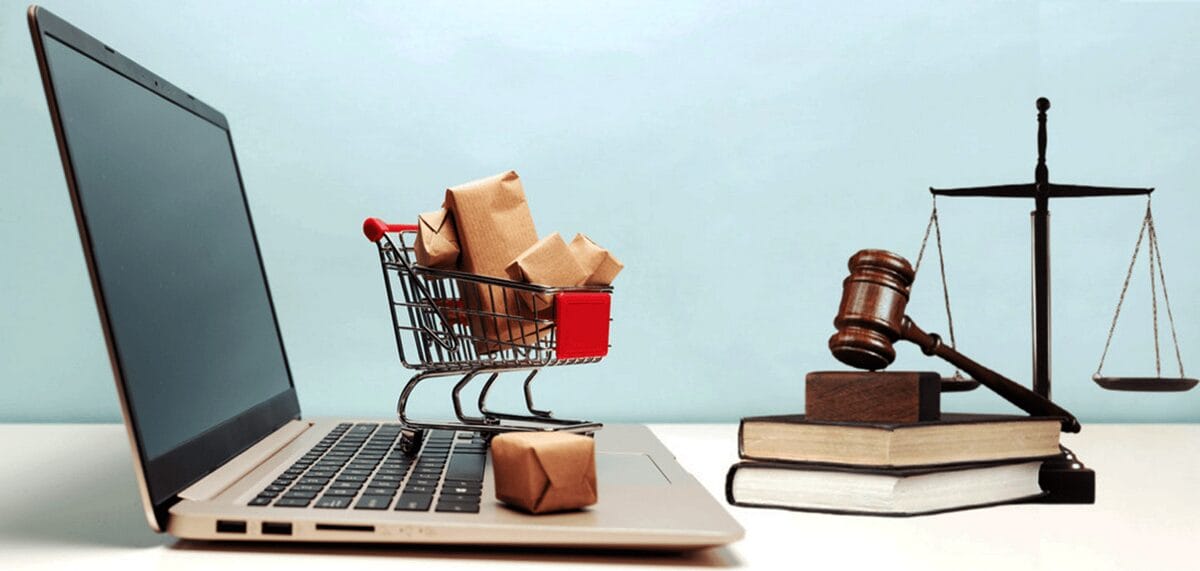
As we’ve been mentioning, dropshipping is legal as long as you play it right. So, what are the most common mistakes that can get you into trouble? Let’s see:
- Selling counterfeit or branded products. I know: we’re being repetitive with this. But that’s because it’s really important. Selling fake or unauthorized branded items (think “inspired by” items that are clearly imitations) can lead to legal action, store takedowns, and payment processor bans. If you don’t have permission, don’t list it. Simple as that.
- Misleading shipping times. Saying “2-5 days delivery” when your product actually takes 2-3 weeks is just a straight-up lie. You need to set realistic delivery expectations, be upfront if shipping takes longer, and provide tracking when possible. Customers don’t mind waiting. But they do mind being lied to.
- False advertising. Again: lies. Overhyped product pages are everywhere, but there’s a line you shouldn’t cross. Claims like “guaranteed results”, fake before/after pics, and invented reviews or testimonials can violate advertising laws. If it’s not true, don’t say it.
- Poor refund and return handling. Ignoring refund requests or making returns impossible can quickly lead to chargebacks. And… potentially legal issues as well. Make sure to have a clear return policy, respond to customer issues quickly, and refund when required by law.
💡 Pro Tip: The best way to handle refunds and returns is by using automation. This helps you respond immediately, stay consistent, and avoid delays that can lead to disputes or chargebacks. You can test this out with the AutoDS $1 trial.
Avoid these four clear, straightforward risks, and you’ll be totally fine. The trick is very simple: stay honest, work with reliable suppliers, and be fair with your customers.
Is Dropshipping a Scam?
Another common question: Is dropshipping legal or a scam? Don’t worry: dropshipping is not a scam. In fact, it’s actually a legitimate e-commerce model used by thousands of sellers around the world. The confusion comes from the fact that, like any online business, it’s easy to fall into bad practices.
Ever ordered something that took forever to arrive, looked nothing like the photos, or never even showed up at all? Well, we’ve all been there. That’s the bad side of dropshipping and e-commerce in general.
Add to that overhyped “get rich quick” content, stores with zero branding or customer support, and misleading ads all over social media. The result is lots of people thinking dropshipping in general is a scam.
But it’s not. Again, dropshipping is the business model; the rest is just shady, scammy behavior from just a few sellers out there. The problem is not selling a product you don’t actually stock. The problem is misleading customers, selling fake products, or disappearing after taking a payment.
✅ Legal dropshipping looks like this:
- A branded, professional online store or seller profile.
- Clear product description and real images.
- Honest shipping times.
- Responsive customer support.
- Proper refunds and returns.
⚠️ Instead, this is what illegal or risky dropshipping looks like:
- Selling counterfeit or branded goods. Even worse: pretending to be a brand you’re not.
- Fake reviews and exaggerated claims.
- Hiding long shipping times.
- Ignoring customer complaints or refund requests.
Same model, completely different approaches.
Legal Requirements to Start Dropshipping
This is the part that a lot of “easy money” videos magically skip. Yes, dropshipping is legal, but to run it legally, you still need to set up a few things. The good news? It’s just a bit of paperwork. Boring, yes. But complicated? Not really.
So, this is where we get full-on practical mode. We’ll go through dropshipping laws and regulations in-depth, so you know exactly what you need to start dropshipping.
Business Registration: Do You Need One?
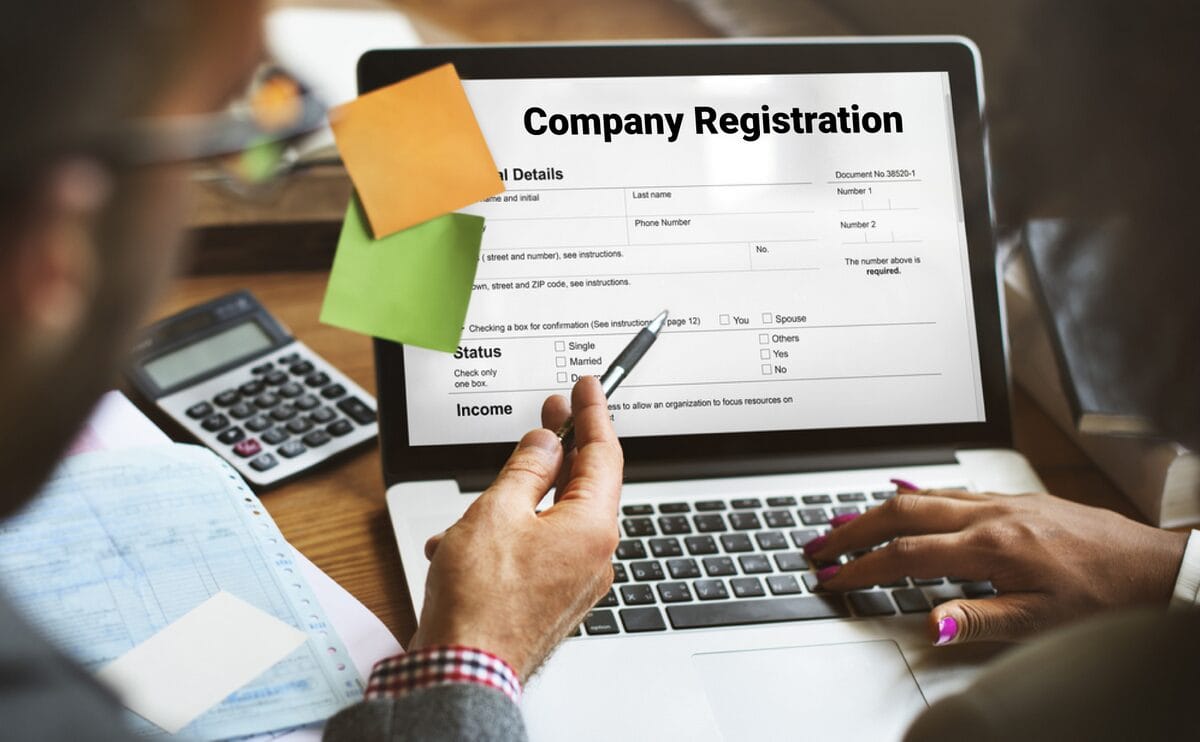
Usually, yes: you do need some kind of registration.
The exact requirements depend on your country, but the general rule is simple. If you’re selling products to the public and making money from it, you’ll usually need to register your business, choose a legal structure, and get any tax IDs or permits required by your local laws.
There are typically two setups when registering your business. This varies by country, of course, but the general structure tends to be similar:
- Sole proprietor / sole trader. In this case, you and your business are legally the same thing. There’s no separate legal entity. Income goes straight to you, and you pay taxes personally. It requires a minimal setup (super easy and quick), and it’s pretty low-cost.
- LLC (Limited Liability Company in the US) or LLT (Limited Company in the UK). Here, you have more legal separation between you and the business. The company has its own entity. You (the owner) get limited liability, meaning your personal assets are protected if something happens. There’s more structure, more paperwork, and sometimes it costs more, but it gives you greater protection.
Similar structures exist in Europe. For example, in Spain, you have the autónomo (similar to a sole trader) and the Sociedad Limitada (SL). In Germany, there’s the GmbH, in France, the SARL, and in Italy, the SRL. They all follow the same core idea. Either you operate as an individual with full responsibility, or you create a separate legal entity.
So, which one to choose? Easy:
👉 Just testing a small store? A sole trader can work.
👉 Planning to scale or want protection? Go for an LLC.
Then, on top of that, you may need a tax ID, local registration, or sector-specific permits depending on where you live and what you sell.
Taxes and VAT: Yes, You Need To Think About Them Early
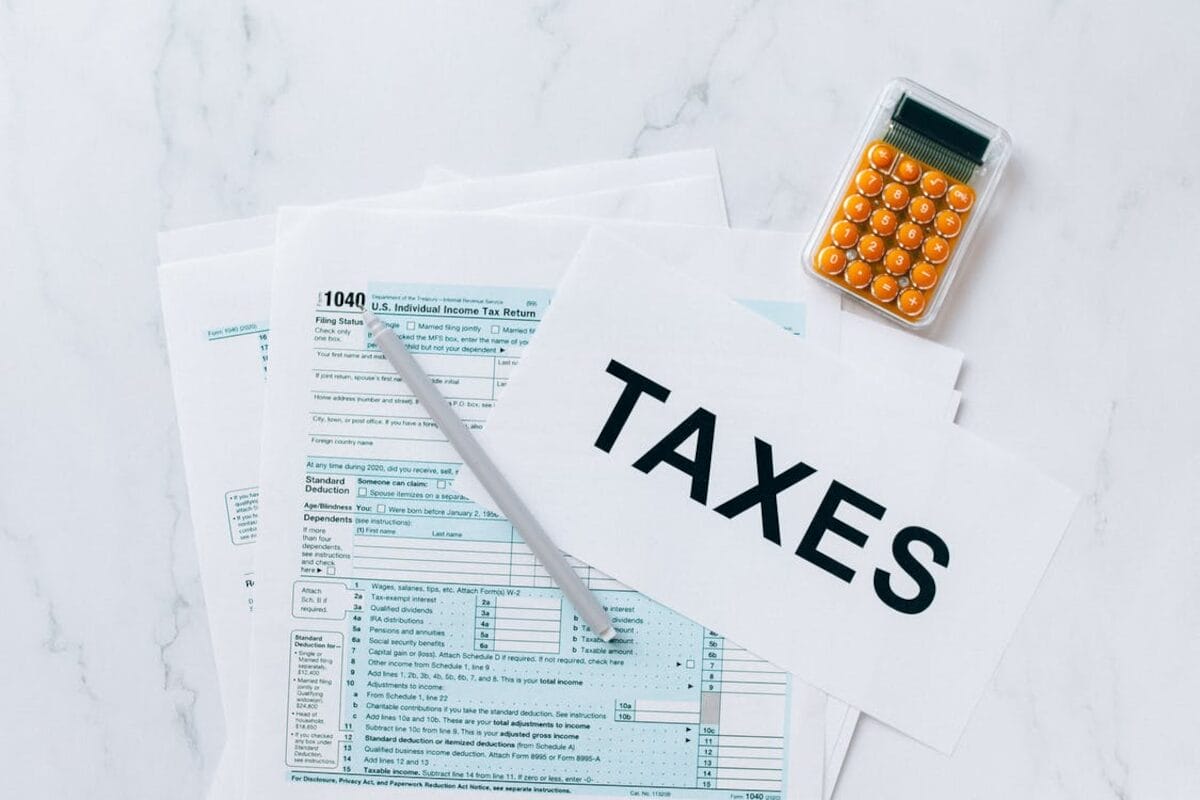
I know: nobody likes to talk about taxes, but bear with me. It really isn’t that complicated: if you sell goods, taxes may apply.
Now, the type of tax depends on three things (and pay double attention here because I’m about to introduce you to the least sexy love triangle in e-commerce): where you’re based, where your customers are, and where the goods are going.
Let’s run a quick check of dropshipping taxes, region by region:
💵 USA: You’ll need to pay federal income tax on your profits (how this is taxed depends on your setup) and, in many cases, self-employment tax as well. On top of that, you may need to collect and remit sales tax depending on where you have nexus (business presence or economic activity in a state).
💷 UK: If your taxable turnover goes above £90,000 over the last 12 months, VAT registration is mandatory. That said, overseas businesses supplying goods or services to the UK may need to register even if they are below that threshold. In addition, you’ll need to pay income tax (or corporation) tax on your profits, depending on your business structure.
💶 VAT is a major compliance issue for cross-border e-commerce. The EU’s VAT system makes clear that imported goods sold into the EU are subject to VAT, and tools like OSS and IOSS were created to simplify reporting and payment. Bottom line? If you’re selling from outside the EU to EU customers, VAT applies from the first sale. Also, if your business is based in an EU country, you’ll also need to pay income tax or corporate tax on your profits, depending on your setup.
💰 Financial Tip: If you’re selling from outside the EU to EU customers, you can work with marketplaces that collect and remit VAT for you, like Amazon and eBay, as well as some private suppliers.
Either way, this is what you should take away from all of this, regardless of your location:
- Do not wait until your store is bigger to think about taxes. Get it done from day one.
- Check where your customers are and whether you need to collect sales tax or VAT there.
- Keep records of orders, invoices, and payments from the start.
- If you’re selling cross-border, learn whether OSS/IOSS or similar systems apply to you.
- Don’t be scared to hire a professional to get everything done for you. This is the easiest way to avoid complications, especially if you’re selling in multiple regions.
Terms And Conditions: The Pages You Shouldn’t Skip

A lot of beginner stores obsess over logos and product photos, then launch with no legal pages. Big mistake. There are two major pages you need before going live:
1. Privacy policy
This is a must when selling online, especially if you collect personal data like names, email addresses, shipping details, payment info, or analytics and cookie data.
In the UK or EU specifically, GDPR laws require that you clearly explain what data you collect, why you collect it, how you use it, and what rights users have over their information. Again: new country, new laws. Each region has its own set of rules.
But the general idea is to answer basic privacy policy details, such as:
- What customer data do you collect?
- Why do you collect it?
- How do you use it?
- Do you share it with third parties?
- What rights do customers have over that data?
Clearly provide information on each one of these aspects, and you’ll have a complete, compliant, and lawful privacy policy ready to protect your business and your customers.
2. Terms and conditions
Think of this as the rulebook for your store. It tells customers how you handle things. They usually cover things like:
- Order acceptance.
- Pricing errors.
- Shipping and delivery terms.
- Returns and refunds.
- Prohibited uses of your site.
- Limitation of liability.
Even where they are not strictly required by a specific law, they are still extremely important. Make sure they’re visible and easy to find on your site.
Payment Processing Compliance: Don’t Skip This Part
Taking payments comes with a lot of responsibility. You’re handling sensitive information, and that comes with rules. Mostly, you need to ensure secure checkout and data privacy.
For dropshippers, that means:
- If possible, use established payment providers like Shopify Payments, Stripe, or PayPal rather than trying to handle card data yourself.
- Do not store card information on your own unless you fully understand the compliance burden.
- Make sure your checkout, plugins, and store setup follow the security requirements of your platform and processor.
Also, payment processors have their own rules. PayPal’s Acceptable Use Policy states that users are independently responsible for complying with applicable laws, and violating those rules can also violate the user agreement. In other words, even if something is technically possible to sell, your payment provider may still restrict it.
Dropshipping vs Marketplace Rules (Important Distinction)
This is where a lot of confusion comes from. Legal compliance and platform rules are not the same. Translation: just because you’re complying with Amazon, eBay, or Shopify’s requirements doesn’t mean you’re complying with the law.
Legal compliance means government laws, such as taxes, consumer protection, business registration, advertising rules, etc. On the other hand, platform compliance refers to the rules set by the marketplace or tool you’re using.
You can be fully legal and still get banned from a platform. Or you can follow platform rules but still break the law (yes, both can happen).
Fear usually comes from confusing the two. For instance, when beginners get a warning or a suspension on a platform, they instantly think they did something illegal. But they didn’t: they just broke a platform rule (which is bad but not that bad and easier to fix).
Quick Platform Examples
Understanding platform rules is like reading the instructions before assembling IKEA furniture. Dedicate them a few minutes, and you’ll be okay. But skip them, and get ready for a few surprises.
Once you get the hang of it, it’s easy to follow them. Most platforms have pretty much similar rules. They just expect you to be transparent and relatable with your customers. Let’s see a few examples:
eBay Rules
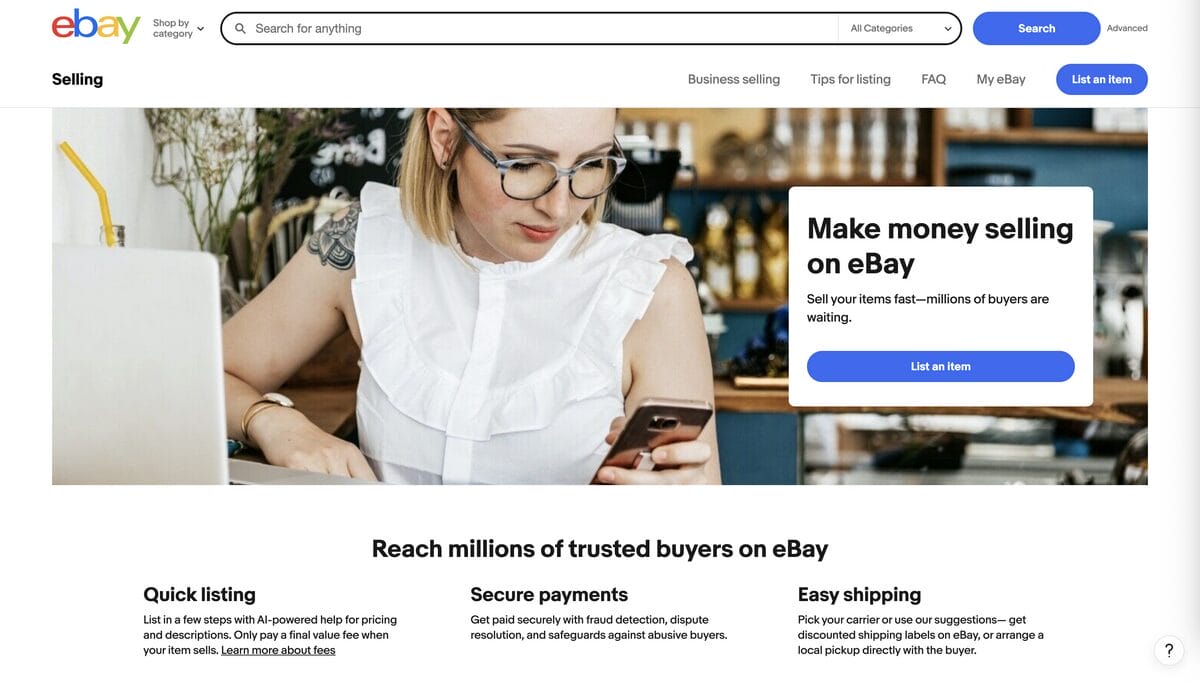
- Ensure safe delivery and easy return processes.
- Establish real item location (don’t say “ships from the US” if it’s coming from overseas).
- Avoid listing items from third-party retailers or marketplaces. Purchasing products from another retailer or marketplace to ship directly to your customer is not allowed. That said, there are ways to get around this rule and dropship from Amazon to eBay without violating compliance.
Amazon Rules
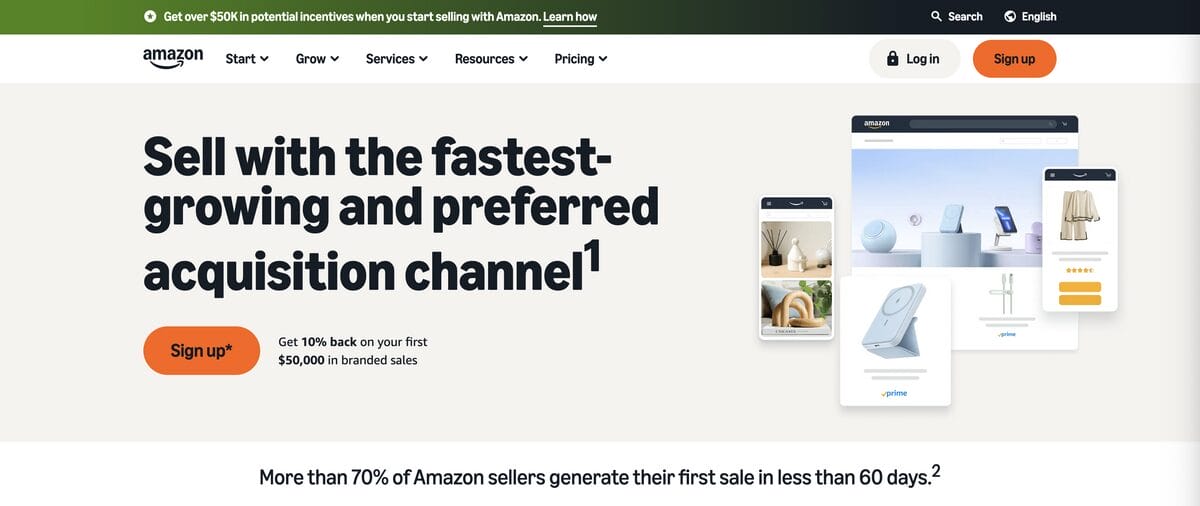
- Must be the seller of record (your name should be on invoices and packaging)
- Never expose your supplier to the customer. The customer should only see your brand as the seller.
- Be fully responsible for returns and customer service.
- Avoid selling prohibited items listed in the Amazon dropshipping policy.
- Comply with Amazon’s seller performance standards.
Shopify Rules

- Set accurate delivery expectations and update customers about delays.
- Handle refunds, returns, and support.
- Avoid selling prohibited or regulated products without authorization.
- Handle tax obligations like sales tax or VAT when applicable.
- Make sure your store looks legit and trustworthy.
Again, none of these requirements is illegal. They’re just basic rules to keep e-commerce a safe and reliable space for both customers and sellers.
How to Stay Legally Safe When Dropshipping
Enough with all the rules. Let’s get practical: how to actually stay compliant without going crazy in the process? Well, good news: following all these laws and requirements isn’t complicated.
It’s mostly about doing the basics right and consistently. Three key pillars: transparency, reliability, and a bit of common sense.
Here’s a quick checklist to keep your business safe:
- Choose reliable, fast suppliers. Honestly? This is 80% of staying compliant. Your suppliers are everything. They control product quality, shipping times, and delivery experience. Always work with suppliers that offer consistent quality, stable shipping times, and brand-neutral packaging.
- Be transparent with customers. One rule that solves half of your problems? Don’t mislead people. Use accurate product descriptions and real images, be clear about shipping times and any extra costs, and make your policies easy to find.
- Set realistic expectations. Don’t advertise fast shipping if it’s not true. Be upfront about international shipping or possible delays, and communicate early if something changes.
- Follow local regulations. Just like we’ve been mentioning, understand whether you need to register your business, check if you need to collect sales tax ot VAT, and make sure your products comply with local laws.
See? Just follow these four basic practices, and you’ll be running a safe, healthy business.
How AutoDS Helps You Stay Compliant
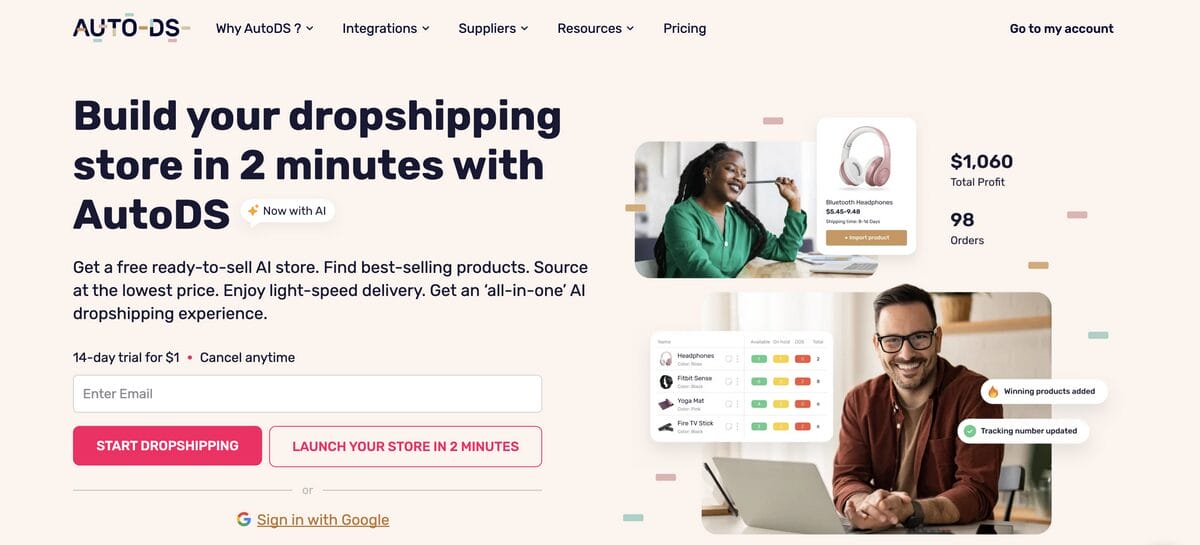
Spoiler alert: no tool can magically make your business legal. Compliance is your responsibility.
But… you can get some help. Dropshipping platforms can help you avoid the common mistakes that usually lead to problems. And that’s where AutoDS comes in.
With full automation at every step, AutoDS reduces errors, guarantees a more reliable order fulfillment, and connects you to vetted suppliers to help you avoid low-quality products, stock issues, and compliance risks. Let’s zoom in:
- Price and stock monitoring. AutoDS helps reduce errors by keeping prices and inventory levels up to date at all times. This prevents you from selling items that are no longer available, and keeps your listings aligned with real supplier data. Fewer errors lead to fewer risks, and fewer mismatches mean fewer unhappy customers.
- Automated order fulfillment. AutoDS automates fulfillment to reduce delays and tracks orders to keep customers updated at all times. This makes it easier to stay compliant with consumer protection laws while keeping your seller performance metrics in good shape.
- Exclusive marketplace and vetted suppliers. AutoDS connects sellers to a curated network of trusted suppliers, helping you source reliable products, avoid counterfeit risks, and deliver good-quality items.
- Centralized control. AutoDS brings your entire dropshipping operation into one place so you can monitor orders, performance, and customer activity, catch issues early, and stay organized. This makes it easier to avoid compliance issues.
Feeling curious? You can give it a try through the $1 trial. This unlocks the full set of features so you can test your workflow, automate key tasks, and see how everything runs before fully committing.
Frequently Asked Questions
Is dropshipping legal in 2026?
Yes, dropshipping is completely legal in 2026. It’s a legitimate e-commerce business model, as long as you follow standard laws like consumer protection, taxes, and truthful advertising.
Is dropshipping legal in the US / UK / EU?
Yes, dropshipping is totally legal in the US, the UK, and Europe. The three of them require you to follow core rules like paying the right taxes, being transparent with customers, and complying with consumer protection laws.
Do I need a business license for dropshipping?
In most cases, yes: you do need a business license for dropshipping. The exact requirements depend on your country or state, but if you’re selling products and making money, you’ll usually need to register your business and possibly obtain tax IDs and permits.
Can dropshipping get you in legal trouble?
No, dropshipping can’t get you in legal trouble. What can trigger issues are bad e-commerce practices, such as selling counterfeit or restricted goods, misleading customers, ignoring refunds or consumer rights, and not handling taxes properly. The model itself is safe; the problem is poor execution.
Is dropshipping considered a scam?
No, dropshipping is not considered a scam. It’s a legitimate fulfillment method used by many in e-commerce. That said, some sellers run low-quality or misleading stores, which is why it sometimes gets a bad reputation.
What products are illegal to dropship?
Illegal products vary by region, but common restricted dropshipping items include counterfeit or branded knockoffs, weapons and hazardous materials, certain supplements, cosmetics, or medical products without approval, and copyrighted items.
Do I need to pay taxes when dropshipping?
Yes, you do need to pay taxes when dropshipping. If you’re selling products, in the US, sales tax may apply depending on nexus, and in Europe or the UK, VAT rules apply (often required from the first sale).
Is dropshipping allowed on marketplaces like eBay or Amazon?
Yes, dropshipping is allowed on marketplaces like eBay or Amazon, but with strict rules. Each platform has its own policies, such as being the seller of record, guaranteeing brand-neutral packaging, and handling taxes. Dropshipping platforms like AutoDS help you stay compliant with these rules.
Start Your Dropshipping Journey with AutoDS
So, here’s the takeaway: dropshipping is completely legal. No need to overthink it. Just treat it like a real business. Be transparent, follow local rules, handle taxes, and respect platform policies.
Want to make that easier? AutoDS helps you stay legal, reduce mistakes, and run your store more reliably with automation, vetted suppliers, and a centralized dashboard. You’re still responsible for compliance, but with the right setup, it becomes a lot easier to get it right.



In the meantime, here are a few helpful reads to keep learning: