


Dropshipping in Australia lets you sell online without buying inventory upfront: a customer orders from your store, and your supplier ships directly to their Australian address. Your job is to choose the products, make the numbers work, and give buyers a reason to choose you.
The local details matter. Christmas lands in summer, your customers pay in Australian dollars, and a delivery estimate for Sydney might not fit a regional WA postcode. A cheap product can quickly become an expensive lesson if you overlook shipping costs or returns.
In this guide, I’ll walk you through getting started, from Australian business and GST requirements to choosing suppliers, setting up your store, and reaching local shoppers. You’ll also see where AutoDS can help with the day-to-day work, so you can build a business that fits your customers and your budget.
Check your ABN eligibility, GST requirements, and obligations under Australian Consumer Law before launching.
Research what Australian shoppers need and set AUD prices that reflect your full costs.
Choose suppliers with verified stock locations, reliable Australian delivery, and clear return policies.
Calculate your profit margins after product costs, shipping, fees, advertising, and expected returns.
Connect your store to AutoDS to simplify imports, monitoring, and supported order automation.
Is Dropshipping Legal in Australia?
Yes, dropshipping is legal in Australia. You can sell products through an online store and have a supplier deliver them directly to your customers. But outsourcing the shipping doesn’t outsource your responsibilities: business registration, taxes, product safety, and consumer rights still matter.
Start with these essentials:
- Check your ABN eligibility. If you’re starting a dropshipping business in Australia, an Australian Business Number belongs on your setup checklist. Eligibility depends on carrying on or starting an enterprise, rather than hitting a particular sales figure. If you operate from overseas, check the rules that apply to your circumstances on the Australian Business Register.
- Monitor your GST turnover. Registration is generally required when your current or projected GST turnover reaches A$75,000. That’s turnover, not profit, and you shouldn’t wait until the financial year ends to check. Below the threshold, registration is generally optional. Follow the ATO’s registration guidance.
- Don’t assume overseas orders are GST-free. Goods with a customs value of A$1,000 or less can fall under Australia’s low-value imported goods rules. Who collects GST depends on the transaction and the businesses or marketplaces involved. Buying through AliExpress or CJdropshipping doesn’t, by itself, settle your store’s tax obligations. Check the imported goods rules.
- Respect the Australian Consumer Law. Products must be safe, of acceptable quality, and match their descriptions. Your supplier’s “no refunds” policy cannot remove your customers’ legal rights, and a manufacturer’s warranty doesn’t replace consumer guarantees. These protections also apply when an overseas business sells directly to Australian consumers. See the ACCC’s consumer guarantees.
Before listing a product, check the Australian requirements for its category and ask for relevant safety documentation. A supplier saying “everyone sells this” isn’t much of a compliance strategy.
🆕 Beginner’s Tip: Keep records from your first order. Save supplier invoices, sales receipts, shipping charges, and refunds. You’ll have a clearer picture of your margins and fewer mysteries to solve at tax time.
Why Dropshipping Is Popular in Australia
Australia already has a really active online audience; Australians spent A$82.6 billion online in 2025, according to Australia Post’s 2026 report. That doesn’t guarantee sales for your store, but it gives you an established market to research and serve.
For entrepreneurs, the appeal comes down to a few practical advantages:
- You can test without buying inventory in bulk. Want to explore travel organizers or pet accessories for Australian shoppers? You can test a small catalog before committing to stock. You’ll still need money for samples, fulfillment, store costs, and marketing.
- Local sourcing can simplify delivery. Products dispatched from Australian warehouses can avoid the international journey on each order. Check the actual stock location and delivery coverage, though: an Australian website doesn’t automatically mean Australian inventory.
- The local calendar creates selling opportunities. Summer holidays, back-to-school shopping, and winter weekends give you different needs to build offers around. Think beach-bag organization in January, not the snow accessories appearing in your US competitor’s feed.
- A focused store can offer useful guidance. Instead of listing every pet product imaginable, you could build around road trips with dogs: seat covers, travel bowls, and boot organizers. Clear demonstrations and useful bundles give shoppers more than just another product thumbnail.
Value matters as much as variety. Australia Post reports that 81% of shoppers look for deals. My takeaway: make the full price, delivery expectations, and product benefits easy to understand. A discount loses its charm quickly when shipping doubles the checkout total.
Best Platforms & Suppliers for Dropshipping in Australia
Your selling platform and supplier do different jobs. Shopify, for example, runs your storefront; your supplier stocks and dispatches the products. AutoDS connects supported parts of that workflow through product sourcing and automation. For Australia, I’d shortlist options based on how well they align with your delivery promises, budget, and sales channel.
Here’s a quick overview before choosing your setup:
| Option | Role | Why consider it for Australia? | Main consideration |
|---|---|---|---|
| Shopify | Hosted storefront | Build your own brand with AUD pricing and payment options available to Australian businesses. | Budget for subscriptions, payment processing, and attracting visitors. |
| WooCommerce | WordPress storefront | Customize your Australian store’s checkout, shipping rules, and content. | Hosting, maintenance, and extensions require more hands-on management. |
| eBay Australia | Marketplace | Reach shoppers searching on the Australian marketplace. | Its local fulfillment policy requires owned or pre-purchased stock and other conditions; buying from another retailer after a sale is prohibited. |
| Dropshipzone | Australian B2B marketplace | Source across categories such as home, garden, and pet care without bulk purchasing. | Requires an active ABN or ACN; check each product’s delivery coverage and freight costs. |
| CJdropshipping | Sourcing and fulfillment platform | Explore its Australian warehouse catalog alongside overseas sourcing options. | Confirm the exact variant has local inventory before promising domestic delivery. |
| AutoDS | All-in-one dropshipping platform | Research and import products, monitor prices and stock, and automate supported workflows for your Australian customer base. | Supplier support, shipping destinations, and order automation must be checked separately. |
For a broader sourcing shortlist, explore this guide to Australian dropshipping suppliers. Next, I’ll walk you through turning those options into a workable store.
Step-by-Step Guide to Launch a Store in Australia
Start with a small, manageable catalog. I’d rather launch with a few products that make sense for Australian buyers than fill a store with items I haven’t checked. Here’s how to move from product ideas to your first orders.
Find Products To Sell
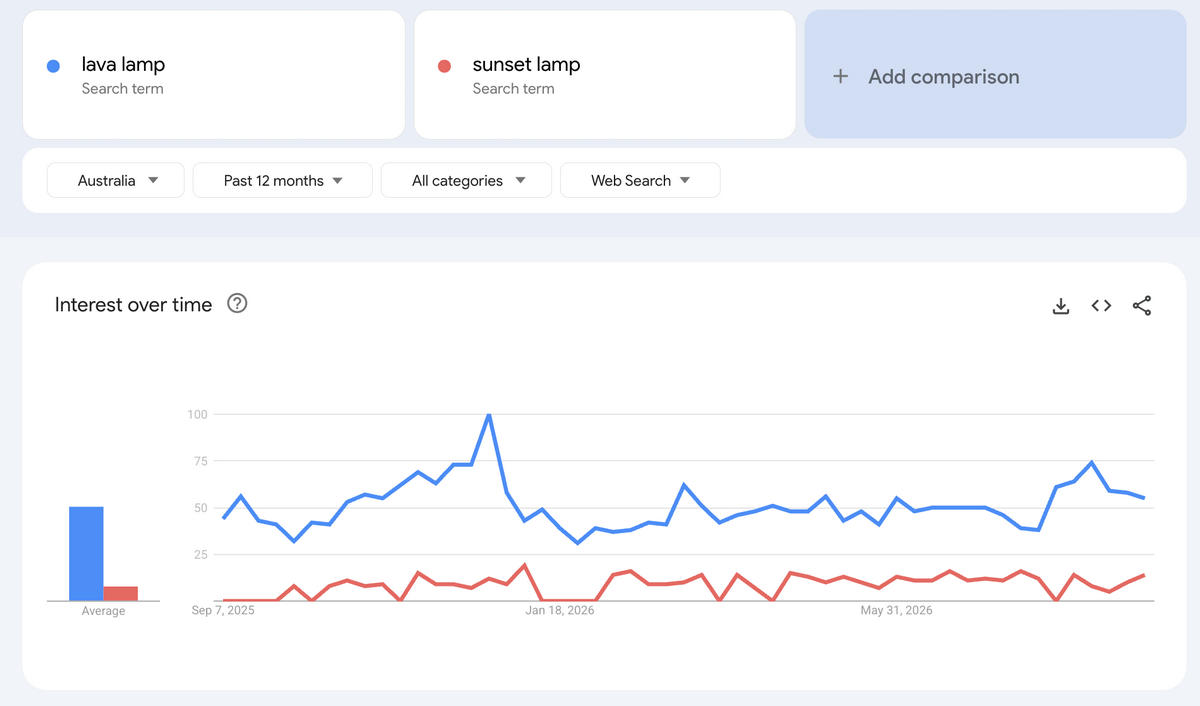
Research demand in Australia specifically. A product going viral overseas is a starting point, but you still need to know whether Australian shoppers want it and whether you can deliver it at a competitive price.
Use this process to narrow down your options:
- Check local search interest. Set Google Trends to Australia and compare relevant product terms across several years. Look for recurring seasonal peaks, then check recent interest. Remember that the chart shows relative search popularity, not sales volume.
- Compare Australian offers. Search local stores and marketplaces for similar products. Record the delivered price in AUD, the estimated arrival date, and recurring review complaints. Could you offer clearer sizing, a useful bundle, or a better product demonstration?
- Match products to local needs. Research beach and travel accessories before the summer holidays, or home organization around back-to-school season. Account for regional differences rather than treating the whole country as one climate.
- Check shipping before falling in love. Lightweight, compact products are a practical starting point. Ask for delivery quotes to a metro and a regional postcode, and check exclusions. That cute storage cabinet might become considerably less cute once freight enters the chat.
- Order a sample before listing. Test the exact variant, inspect its packaging, and check the tracking experience. If you’re outside Australia, arrange a sample delivery to someone in your target market who can inspect it.
Calculate what remains after the sale. Subtract product cost, shipping, payment, and marketplace fees, advertising, and a returns allowance from your selling price, treating GST consistently with your registration status. A healthy-looking supplier markup can disappear surprisingly fast.
🔍 Research Tip: Keep a simple Australian product shortlist. Track demand, delivered cost, competing prices, shipping coverage, and sample results. Prioritize the product with a clear customer benefit and workable numbers over the one with the most exciting viral video.
Choose A Selling Channel

For an Australian store, the selling channel decision comes down to how you’ll attract buyers, collect payments, and meet delivery expectations. Marketplace rules can also determine which sourcing arrangements you can use.
| Channel | When I’d consider it | Main trade-off for Australian sellers |
|---|---|---|
| Shopify | You want your own branded store with AUD pricing and control over offers, content, and customer relationships. | You need to generate traffic and budget for the subscription, apps, and payment fees. |
| WooCommerce | You already use WordPress or want more control over your store’s configuration. | You manage hosting, security, updates, and compatibility between Australian payment and shipping extensions. |
| eBay Australia | You have owned or pre-purchased stock and a fulfillment partner that meets its local policy. | It isn’t suitable for listing products and then buying them from another retailer after each sale. |
| Amazon Australia | Your supplier can consistently meet Amazon’s seller identification, dispatch, tracking, and returns requirements. | You face marketplace fees and less flexibility over the customer experience. |
A few things to keep in mind:
- Review rules first: eBay Australia’s policy requires you to own stock and protect buyer data, while Amazon Australia mandates that you act as the “seller of record.”
- Verify, don’t assume: Just because a supplier ships to Australia doesn’t mean their service is automatically compliant with marketplace policies.:
- Check eligibility: Before building your checkout, verify which payment options are available for your business location (e.g., Shopify Payments supporting local cards, Apple Pay, and Google Pay).
- Compare costs: Always analyze processing fees, currency conversion rates, and payout timing before selecting your payment provider.
My starting choice is Shopify for a beginner building an independent store for Australian buyers. I’d lean toward WooCommerce if you’re already comfortable with WordPress, and consider marketplaces once your supplier arrangement meets their requirements. Start with one channel, price in AUD, and keep sufficient cash on hand to pay suppliers while customer payouts are pending.
Choose A Dropshipping Supplier
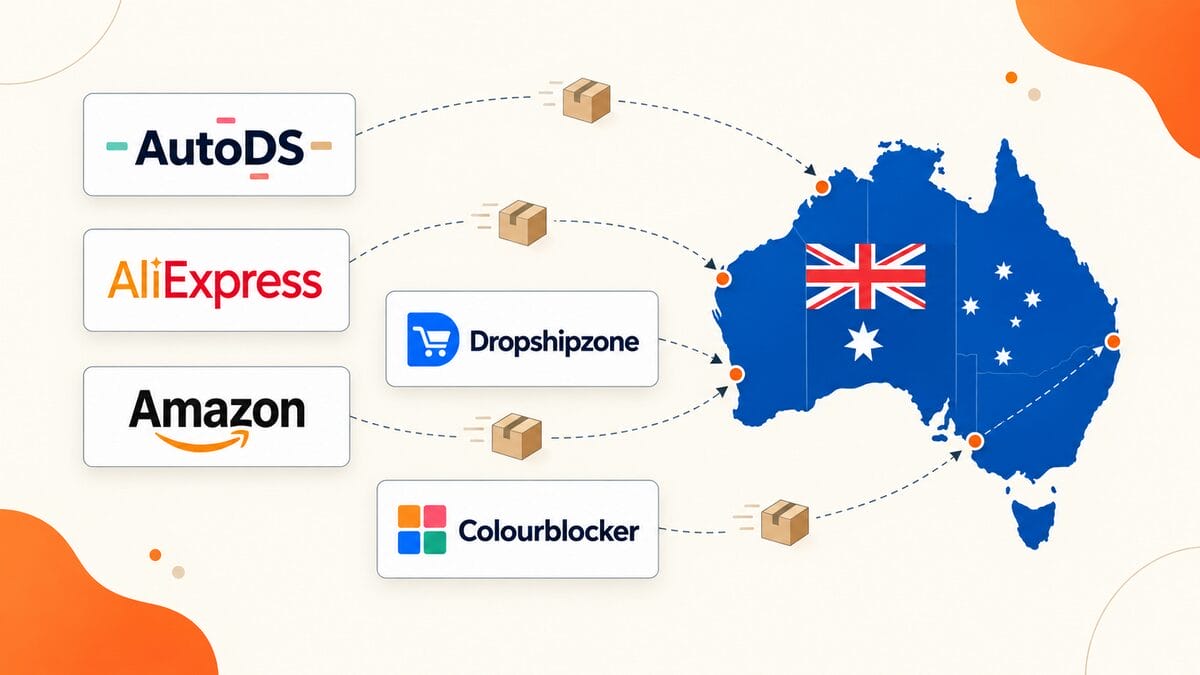
Before committing to a supplier, you want to know where orders leave from, which Australian postcodes it serves, and how it handles returns. Compare a local and an overseas option using the same product specifications and delivery addresses.
Before committing, ask each supplier these questions:
- Where is this variant stocked? Confirm the dispatch location for the exact size, color, or model you’ll sell. An “Australian warehouse” badge doesn’t tell you whether your chosen item is sitting there.
- What is the full delivered cost? Request quotes in AUD where possible, including handling, freight, and any regional surcharges. Compare a Sydney address with a regional WA address to see how the economics change.
- How long until the customer receives it? Ask for processing time and transit time separately, plus the carrier and tracking service. Check restrictions for PO boxes, Parcel Lockers, and remote destinations.
- Where do returns go? Get the return address, approval process, and arrangements for damaged or incorrect items in writing. An overseas return journey can make a low-cost product expensive to resolve.
- Can it support your selling channel? Check packaging, seller identification, stock updates, and order-processing options. Ask which functions are handled through your chosen integration, rather than assuming everything is automated.
Local and overseas sourcing serve different priorities. I’d favor verified Australian stock when delivery speed and easier returns justify the cost. Overseas sourcing can make sense for a distinctive product, provided the delivered price, sample quality, and shipping experience hold up.
Test the supplier’s communication, too. Ask a specific question about an unavailable variant or a damaged delivery. A clear, useful answer tells you more than a generic promise of “excellent service.”
📦 Supplier’s Tip: Confirm bundles ship together. If you’re selling a travel kit to Australian buyers, check that every item can be shipped from the same warehouse in a single parcel. Otherwise, separate shipping charges and staggered arrivals can undermine the offer.
Pro Step: Connect With An Automation Tool
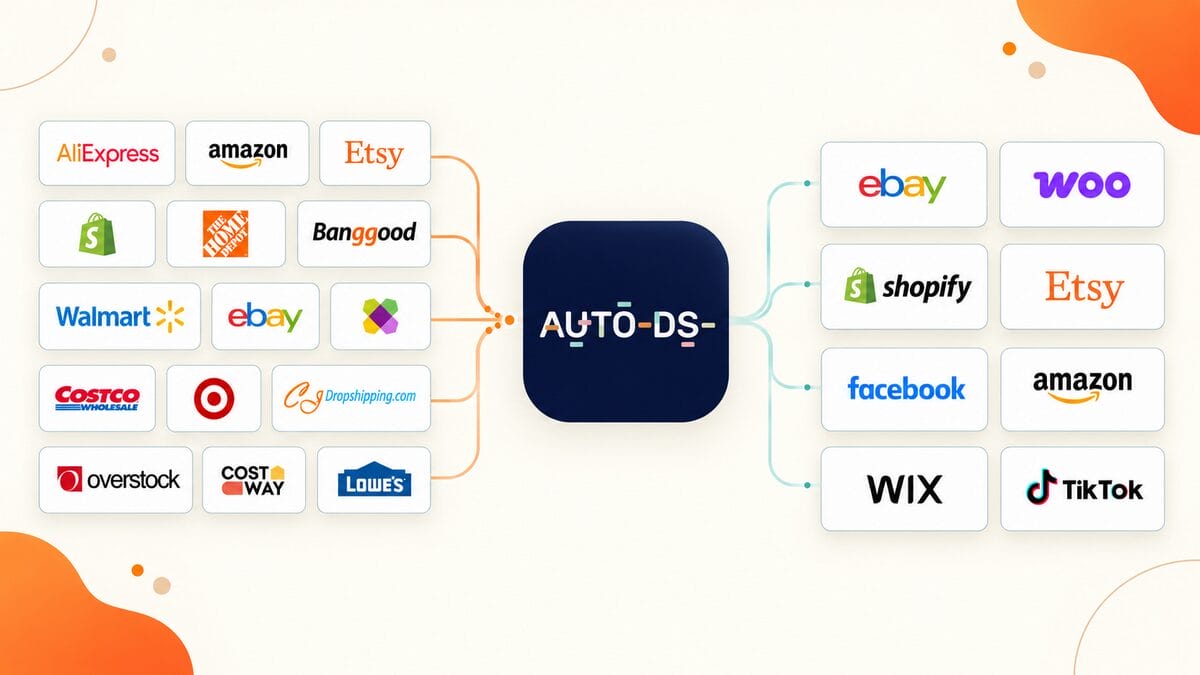
Connect your tools before orders start arriving. You can try AutoDS for $1 to bring product sourcing, imports, monitoring, and supported order workflows into one place. For a store serving Australian buyers, begin with a few proven products and configure the settings based on their actual delivery costs.
AutoDS helps reduce repetitive store management. Here’s where its features fit into your Australian operation:
- Product imports: Bring listings from supported suppliers into your store, then adapt descriptions, measurements, and delivery information for Australian shoppers.
- Price and stock monitoring: Track changes to supported suppliers so you’re less likely to keep selling an unavailable variant or overlook a price increase. Configure your pricing rules with room for Australian shipping costs and fees.
- Order automation: Use automatic ordering where your supplier, region, and selling channel support it. This can reduce manual address entry and order placement.
- Tracking updates: Sync tracking on supported workflows so Australian customers can follow their delivery without waiting for you to copy details between platforms.
Check each capability separately. A supplier supporting product imports doesn’t necessarily support automatic orders, and a monitored price won’t necessarily capture every postcode surcharge. Review the available functions for your setup and configure price and stock monitoring before publishing.
Run a test order to Australia. Check that your store displays the intended AUD price, the correct variant reaches the supplier, and tracking returns to your selling channel. I’d get that small workflow running smoothly before importing a larger catalog.
Import Your Products

Turn supplier listings into useful product pages. Once your products are imported, review them from an Australian buyer’s perspective: What am I getting, what’s the total price, and when will it arrive?
Edit these essentials before publishing:
- Write clear titles and descriptions. Lead with the product and its practical benefit. “Water-Resistant Car Boot Organizer” tells your customer more than a supplier title packed with “HOT NEW BEST.”
- Localize measurements and language. Use centimeters, liters, and kilograms where appropriate. For clothing, provide actual garment measurements alongside any Australian size equivalents rather than assuming an overseas “medium” will fit.
- Set a workable AUD price. Include product costs, delivery, fees, and your target margin in the calculation. Check that shipping rules account for regional surcharges and exclude postcodes your supplier cannot serve.
- Explain delivery before checkout. Show realistic processing and transit estimates. Only describe an item as shipping from Australia when you’ve verified that the selected variant is stocked there.
- Use accurate images and variants. Publish your own sample photos or images you have permission to use. Make sure customers can tell which color, size, and accessories their selection includes.
Make the benefit easy to picture. For a boot organizer, show how it holds groceries or beach gear, include its dimensions, and explain how it folds away. That gives Australian shoppers something useful to judge beyond a polished product photo.
Always preview the full purchase on mobile. Select a variant, add it to the basket, and test both a metro and a regional Australian address. Fix any unexpected shipping charges, missing delivery details, or confusing size options before sending traffic to the page.
Market Your Store
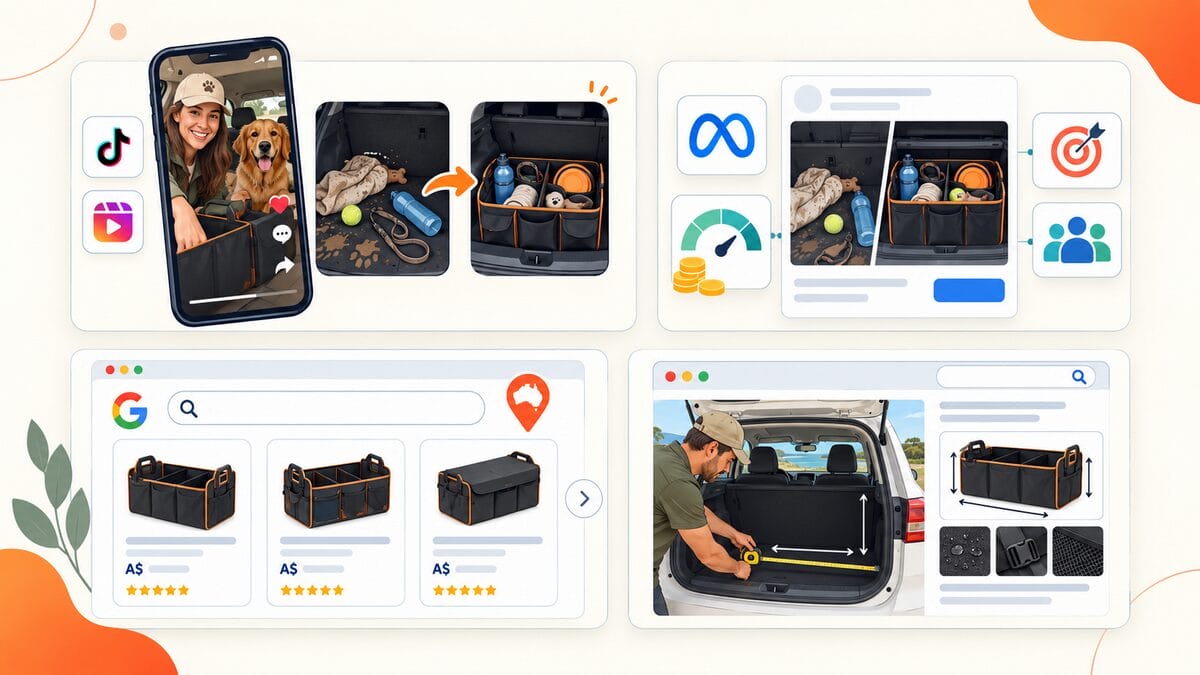
Start with one audience and one offer. “People in Australia” is a location, not a marketing strategy. “Dog owners planning weekend road trips” gives you a problem to solve, a product to demonstrate, and a reason for someone to stop scrolling.
Combine an organic content routine with one paid channel you can afford to test:
- Use TikTok and Reels for demonstrations. Film your sample solving a recognizable problem: muddy paws on the back seat, groceries rolling around the boot, or an overstuffed beach bag. Test different opening hooks and answer buying questions in follow-up videos. Work with Australian creators when local settings and firsthand demonstrations would improve the content.
- Try Meta ads for visual products. A before-and-after demonstration can suit an item that shoppers aren’t actively searching for yet. Start with your serviceable Australian locations and a few distinct creative angles. Avoid dividing a small budget across dozens of interests before you know which message earns purchases.
- Use Google Search or Shopping for existing demand. Consider these when people already search for your product type. Compare the delivered price against Australian competitors first, and send visitors to the matching product page. Check Google’s location settings: its default can include people interested in your target location, rather than only people in or regularly in it.
- Build helpful search content. Answer specific questions such as “Will this boot organizer fit a small hatchback?” with measurements, photos, and practical guidance. Use Australian spelling naturally and make AUD pricing and delivery coverage easy to find.
Plan campaigns around Australian seasons. Summer holiday products need a different calendar from winter accessories. Build backward from the occasion, allowing time for content testing and delivery. Your Christmas creative can have beach towels and sunshine; it doesn’t need to audition for a snowy Hallmark movie.
Measure purchases against your actual costs. Set up purchase tracking before paying for traffic, then compare customer acquisition cost with what remains after product costs, Australian delivery, fees, and expected returns. Likes are encouraging; profitable orders tell you whether to keep investing. For more channel ideas, explore these e-commerce marketing strategies.
📢 Marketing Tip: Match advertising to delivery coverage. Exclude unserviceable locations where the ad platform allows, and enforce those restrictions at checkout as well. Review results by region before expanding your budget.
Fulfill Orders
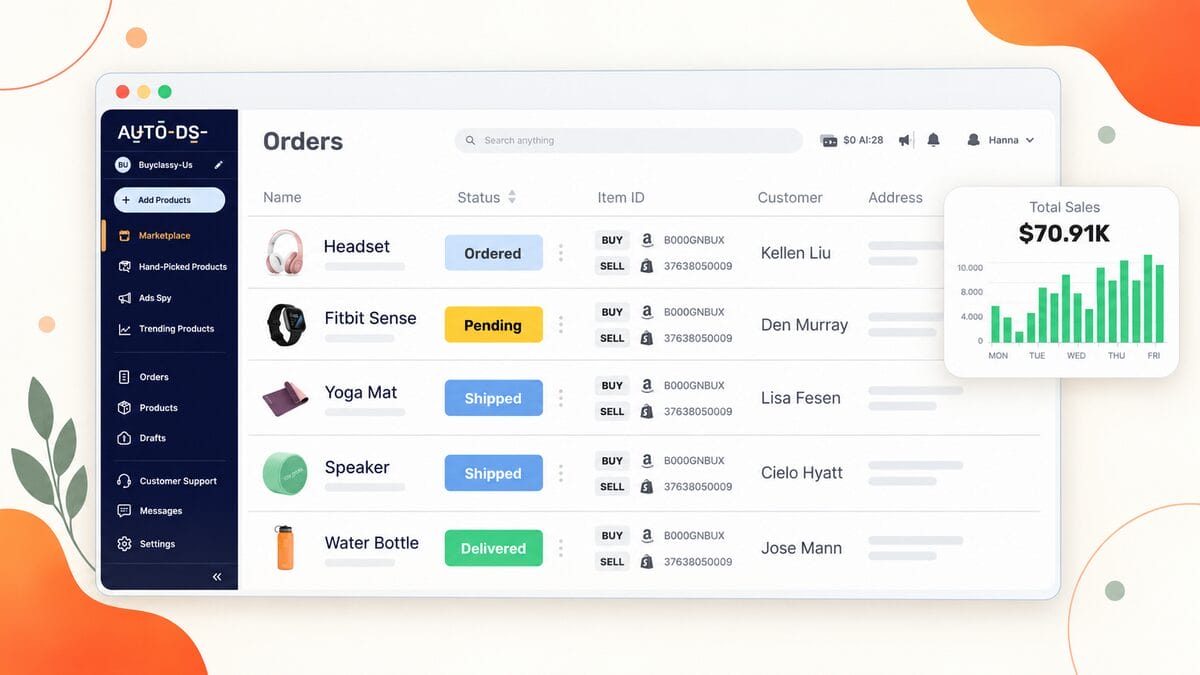
Every order needs a clear path to delivery. Once an Australian customer pays, confirm the variant, stock location, and complete address (including unit number, state, and postcode) before sending it to your supplier.
Manual fulfillment follows a simple routine: place the supplier order, choose shipping that matches your advertised timeframe, pay, and save the reference. Once dispatched, upload the carrier and tracking number to your selling channel.
AutoDS can automate those repetitive steps. Auto-Order uses your connected buyer account and supports Amazon Australia and eligible AliExpress AU workflows. Fulfilled by AutoDS uses AutoDS buyer accounts and your prepaid balance; supported AU supplier regions include AliExpress, CJdropshipping, and Banggood. Confirm the exact setup in the automation compatibility guide, since regional support doesn’t guarantee local inventory or delivery to every postcode.
Set up funding before enabling automatic orders. Fulfilled by AutoDS requires the Orders Processor add-on, order balance, and Auto-Order Credits. Factor currency conversion into your costs when selling in AUD and funding a foreign-currency wallet. Tracking updates sync to supported selling channels, but failed orders and stalled shipments still need your attention.
Amazon FBA works differently. With Fulfillment by Amazon Australia, you buy inventory upfront and send it to Amazon, which handles storage, dispatch, customer service, and returns for those orders. It’s an option for established products, with additional inventory and fulfillment costs.
Base delivery promises on the actual route. Combine processing time with the carrier’s estimate for the Australian postcode, and contact your customer early if dispatch slips. Automation speeds up order handling; it doesn’t make a parcel cross the country faster.
Provide Excellent Customer Service
Make it easy to get help. Australian buyers shouldn’t have to chase your supplier or decode a tracking page themselves. Publish a clear contact method, state your support hours with the relevant Australian time zone, and set a response target you can consistently meet.
Build your support routine around these basics:
- Give useful delivery updates. If a parcel is delayed, explain what you’ve checked and when you’ll follow up. “I’ve contacted the carrier and will update you tomorrow,” gives the customer something more helpful than “please be patient.”
- Own the resolution. Ask for the order number and relevant details, then coordinate with your supplier yourself. Keep the customer informed without making them manage the conversation.
- Separate faulty goods from change-of-mind returns. Under Australian Consumer Law, a major product problem generally gives the customer a choice of a refund or a replacement. Change-of-mind returns depend on your advertised policy, which you must honor.
- Make return instructions practical. Confirm the address and process before asking someone to post an item. If a fault is confirmed, you must reimburse reasonable return costs already paid; large or heavy faulty items can require collection arrangements. Follow the ACCC’s remedy guidance.
Use complaints to improve your store. If Australian customers repeatedly ask about sizing, update the measurements. If one delivery region continues to cause delays, revisit its shipping estimate. Also, track faults by product and supplier, so you can pause a troublesome listing before more buyers have the same experience.
Frequently Asked Questions
Do dropshippers in Australia need an ABN, and when is one required?
An ABN is generally part of setting up an Australian dropshipping business, but there’s no minimum sales threshold that automatically triggers it. You need an ABN for standard GST registration, and suppliers may require one before accepting you. Eligibility depends on starting or carrying on an enterprise; overseas sellers should check their circumstances separately.
At what turnover do I need to register for GST as an Australian dropshipper?
GST registration is generally required when your current or projected GST turnover reaches A$75,000. These tests look at rolling periods: the current month plus the previous 11 months, or the current month plus the next 11 months. The threshold concerns turnover, not profit. You generally need to register within 21 days of becoming required to do so, according to the ATO.
Does GST apply to dropshipped goods imported from overseas suppliers like AliExpress or CJdropshipping?
Yes, GST can apply. Goods with a customs value of A$1,000 or less can fall under the low-value imported goods rules, with collection responsibilities depending on the seller, marketplace, customer, and transaction. Higher-value imports generally face border tax procedures. GST charged on your supplier purchase doesn’t automatically settle the GST treatment of your customer sale.
What are the best local and overseas suppliers for dropshipping to Australian customers?
Dropshipzone is an Australian B2B option worth comparing, while CJdropshipping and AliExpress offer overseas sourcing and selected Australian warehouse options. AutoDS can help you access suppliers and manage supported workflows. The best fit depends on your product, sales channel, delivery cost, and return arrangement. Verify the exact stock location for the variant rather than assuming the entire catalog ships locally.
How long does dropshipping delivery usually take to Australian addresses, and how can I speed it up?
There’s no single reliable timeframe: total delivery includes supplier processing plus transit to the customer’s postcode. As a domestic reference, Australia Post lists Parcel Post delivery as 2 or more business days, depending on the route; this excludes your supplier’s preparation time. Overseas orders need a separate estimate for the selected shipping service. Choose verified local stock, prompt dispatch, and a suitable tracked service to shorten delivery.
What refund, warranty, and Australian Consumer Law (ACL) obligations do dropshippers have to customers?
You’re responsible for resolving problems with products you sell, even when a supplier ships them. Major faults generally entitle customers to choose a refund or replacement; minor faults usually require a free repair within a reasonable time. Consumer guarantees can continue beyond a written warranty, and store policies cannot remove them. Change-of-mind returns follow your advertised policy.
Is dropshipping still a profitable business model in Australia, given shipping costs and competition?
Dropshipping can be profitable in Australia when your selling price covers sourcing, delivery, advertising, fees, returns, and applicable taxes, with money left over. A low supplier price alone doesn’t establish profitability. Test a small catalog, calculate margins using actual Australian delivery quotes, and increase spending only when completed orders show the numbers work.
Start Dropshipping in Australia with AutoDS
Build your store around Australian buyers. Choose products that fit their needs, calculate your costs in AUD, and make delivery promises your suppliers can meet. Start with a small catalog and use those first orders to learn what deserves more investment.
AutoDS brings product research, importing, price and stock monitoring, and order automation into a single platform. Once you’ve checked compatibility with your supplier and channel, you can start your AutoDS trial for $1 and put your Australian store’s workflow to the test.
Keep building your know-how with these practical reads: